Overview
The Overworld is the dimension you spawn into, and it is the reference against which the other two are measured. It runs from bedrock at Y -64 to the build limit at Y 320 — 384 blocks of vertical space — and it is the only dimension with a day-night cycle, weather, and water that behaves like water. Since the Caves & Cliffs generation change the world is built from two overlapping systems: surface terrain shaped by continentalness and erosion noise, and an independent cave layer of cheese caves, spaghetti caves and noodle caves that carves through it, which is why a cave mouth can open onto a mountainside at Y 150 and a ravine can cut to bedrock. Almost every biome in the game is here, along with every ore except nether quartz, nether gold and ancient debris, every passive animal, and every structure except the fortress, bastion and end city. The practical consequences of the height range are worth internalising: the deepslate layer starts around Y 0 and the ore distributions change with it, diamond peaks at Y -59, lapis peaks near Y 0, and the mountain iron and emerald bands sit above Y 200. You leave through an obsidian portal or an end portal, and you come back to the same place.
Everything that is not netherite, blaze rods or elytra: all farming, all animal breeding, every Overworld ore, villages and trading, and the only dimension where a bed sets your spawn point instead of exploding.
What it is
The Overworld is the dimension you spawn into and the one every other dimension is measured against. It runs from bedrock at Y −64 to the build limit at Y 320, giving 384 blocks of vertical space, and it is the only dimension with a day-night cycle and weather.
It holds the overwhelming majority of the game's content: almost every biome, every ore except nether quartz, nether gold and ancient debris, and every passive animal.
How the height works
Since the Caves & Cliffs update the world is split into two overlapping generation bands. Surface terrain builds upward from around Y 60, while cave systems — including the large cheese, spaghetti and noodle caves — carve downward to the deepslate layer that begins around Y 0 and runs to bedrock.
Ore placement follows that split. Coal and copper favour the upper half, iron generates in two bands, and diamond, redstone and lapis concentrate in deepslate below Y 0.
Getting to the other dimensions
A nether portal built from at least ten obsidian and lit with flint and steel takes you to the Nether. The End requires finding a stronghold, filling the end portal frame with eyes of ender, and stepping through.
Properties
The Overworld runs Y −64 to Y 320 and holds 55 biomes and 21 generated structures. Distances here are 1:1 (the reference dimension).
- Weather
- Yes
- Day-night cycle
- Yes
Biomes in The Overworld
55 biomes generate in The Overworld. Which one you are standing in decides the mobs, the structures and, in the Overworld, the weather.
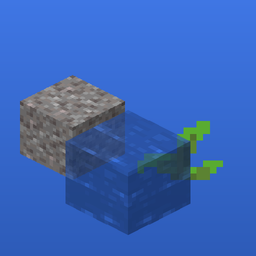
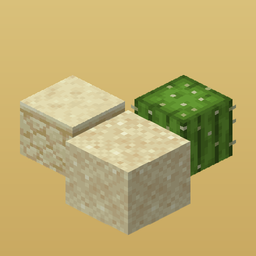
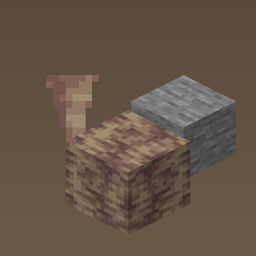
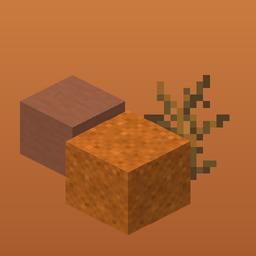
Structures in The Overworld
Village, Desert Pyramid, Jungle Pyramid, Swamp Hut (Witch Hut), Pillager Outpost, Woodland Mansion and 15 more generate here.
- Village — Villages generate in five architectural variants — plains, desert, savanna, taiga and snowy — each built from local materials with its own house shapes, and the variant is fixed by the biome of the village centre even if it sprawls across a border.
- Desert Pyramid — A sandstone temple with an orange-and-blue terracotta motif on its floor, always with a hidden shaft under the centre tile.
- Jungle Pyramid — A mossy cobblestone temple buried in jungle canopy, and the only structure in the game built around an actual redstone puzzle.
- Swamp Hut (Witch Hut) — A small stilted shack of spruce planks standing over swamp water, registered internally as the swamp hut and known to everyone as the witch hut.
- Pillager Outpost — A dark oak watchtower flying an ominous banner, surrounded by tents, log piles, and often a cage holding an iron golem or, beneath the tower, cages containing allays.
- Woodland Mansion — An enormous three-storey house of dark oak and cobblestone, generated only in dark forests and typically tens of thousands of blocks from spawn, which makes a woodland explorer map from a cartographer villager the practical way to find one.
- Ocean Monument — A prismarine fortress on the deep ocean floor, guarded by three elder guardians that inflict Mining Fatigue III across a fifty-block radius so you cannot simply mine in.
- Ocean Ruins — Scattered clusters of sunken buildings, in a sandstone warm-water variant and a stone cold-water variant.
- Shipwreck — A wrecked sailing ship, generated upright, capsized, or broken in two, on the sea floor or beached on the sand.
- Buried Treasure — A single chest buried beneath a beach or shallow sea bed, findable only with a buried treasure map from a shipwreck or ocean ruin.
- Stronghold — A sprawling underground maze of stone brick corridors, spiral staircases, storerooms, prison cells and libraries, and the only place the End portal exists.
- Abandoned Mineshaft — Long branching wooden corridors with rails, minecarts, support beams and floating sections over ravines and caves.
- Dungeon (Monster Room) — A small cobblestone-and-mossy-cobblestone room with a mob spawner in the centre and one or two chests against the walls.
- Ancient City — A vast deepslate ruin buried in the deep dark, built around a central sculk-covered structure and a frame of reinforced deepslate that leads nowhere.
- Trail Ruins — A buried settlement of terracotta, mud bricks and stripped logs, almost entirely underground, so it is easy to walk over one without noticing.
- Trial Chambers — A copper and tuff complex of interconnected combat rooms, corridors and reward vaults, generating throughout the Overworld underground.
- Ruined Portal (Overworld) — A broken nether portal frame of crumbling obsidian and blackstone, with lava, netherrack and gold blocks scattered around it, plus a chest.
- Igloo — A small snow dome containing a bed, a crafting table, a furnace and a redstone torch on the floor.
- Amethyst Geode — A hollow spherical cavity with three concentric shells: smooth basalt outside, calcite inside that, and a lining of amethyst blocks and budding amethyst around a chiming hollow centre.
- Fossil — A buried skeleton of bone blocks shaped like a spine, rib cage or skull, occasionally with coal ore mixed in.
- Desert Well — A small sandstone well with a water source at its centre, historically a purely decorative curiosity.
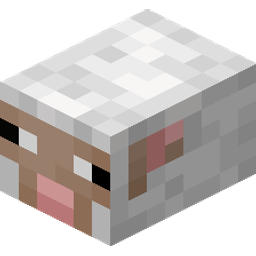
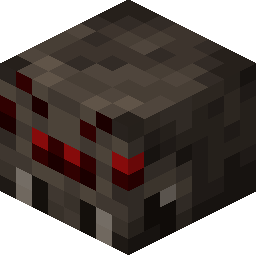
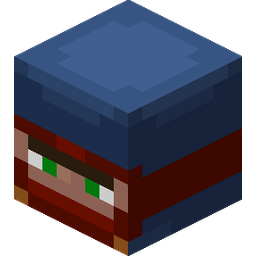
Mobs that spawn throughout it
These spawn in open terrain anywhere in The Overworld given the right conditions. Mobs bound to a structure or a spawner are on the structure's own page instead.

Guides and tools that cover this
Frequently asked questions
How do I get to The Overworld?
You start there. Every other dimension returns you to it through the portal you arrived by.
How big is The Overworld?
It runs Y −64 to Y 320, and distances are 1:1 (the reference dimension).
How to get it
You start here. From the Overworld a nether portal of at least 10 obsidian blocks reaches the Nether, and an end portal found in a stronghold and filled with 12 eyes of ender reaches the End.
Tips
- Dig your main strip mine at Y -59: diamond and redstone both peak there, and bedrock fills most of what is below.
- Lapis peaks around Y 0, not at the bottom, so a branch mine at sea-level depth is the fastest way to gather it.
- Iron and emerald both have mountain bands above Y 200; mining a jagged peak from the outside beats tunnelling.
- See best Y level for every ore and the ore Y-level tool before planning a mine.