Overview
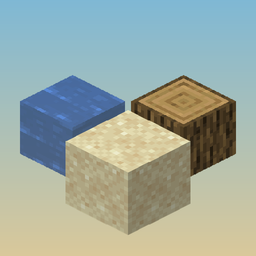
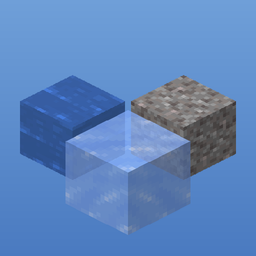
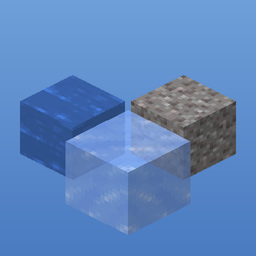
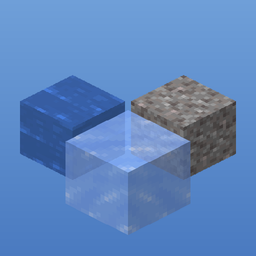
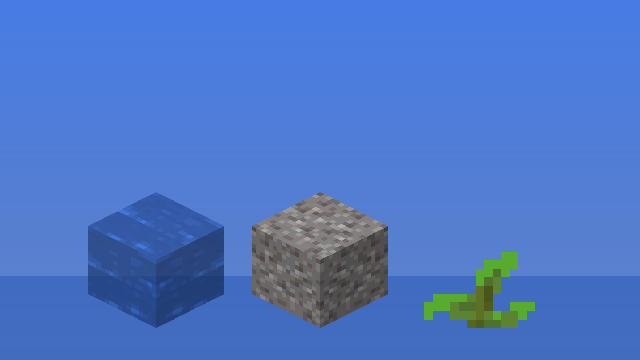
River is the winding water channel that cuts through whatever biome it crosses, and it is far more useful in the early game than its size suggests. Clay generates in the riverbed in large patches, and river clay is the cheapest source of bricks and flower pots before you have a shovel worth swinging in an ocean. Sugar cane grows along both banks, which makes rivers the standard early paper supply for books, maps and bookshelves. Sand and gravel line the bed, and gravel is where flint comes from. Squid spawn in the water and drop ink sacs for black dye and books-and-quills; salmon spawn near the mouth. The other thing a river gives you is speed: a boat on flowing river water is the fastest early travel in the game, roughly twice walking pace with no fuel and no infrastructure, and rivers connect biomes across long distances. Drowned spawn in rivers at night as in any water body. A river that crosses a snowy biome becomes a frozen river, a separate biome with its own ice sheet. Rivers border every land biome they cut through and end at an ocean.
Clay for bricks and flower pots, sugar cane for paper, sand and gravel from the bed, squid for ink sacs, and a free high-speed travel route between biomes.
River sits in the temperate band of Minecraft's biome table, generating in the Overworld at a base temperature of 0.5.
Weather reaches River: it rains during storms, so crops grow and cauldrons fill on their own.
2 mobs name River specifically among their spawn biomes: Drowned and Salmon.
Rivers cut through whatever biome they cross, carrying sand, clay and squid. They are the cheapest early source of clay, and a boat on one is the fastest overland travel in the early game.
How to get it
Rivers generate across every Overworld landmass and almost every world has one within 200 blocks of spawn. Follow one downstream in a boat at roughly 8 blocks per second to map an area quickly.
Tips
- Clay comes up 4 balls per block; smelt each ball to a brick, and 4 bricks make 1 brick block.
- Ride a boat downstream and place a chest boat if you are hauling — it carries a full 27-slot chest with you.
- Sugar cane only needs 1 water block beside the block it stands on, so a river bank is already a farm.
- Light the bank if you camp on one: drowned spawn in the water and walk out onto land after dark.
Climate and generation
River has a base temperature of 0.5, which puts it in the temperate band. Temperature is not a thermometer reading — it is the single number that decides snow versus rain, whether water freezes over, and what colour the grass renders.
Above 0.15 water stays liquid and any precipitation falls as rain.
| Property | Value | What it changes |
|---|---|---|
| Temperature | 0.5 | Decides whether rain falls as snow, whether water freezes, and the grass and foliage tint. |
| Precipitation | Yes | Cauldrons fill on their own and farmland stays hydrated during a storm. |
| Dimension | Overworld | Sets which mobs, structures and ores can generate at all. |
| Grass and water tint | #7BA4FF | The colour the game applies to grass, leaves and water in this biome. |
Properties
- Grass and water tint
- #7BA4FF
- Structures generating here
- 0
Mobs in River
Drowned and Salmon name River specifically as a spawn biome, so this is where you go to find them.
On top of those, the mobs that spawn in open terrain anywhere in the Overworld can appear here too, given the right light level. Mobs that only come from a structure or a spawner — breezes from trial chambers, blazes from fortresses, evokers from mansions — are deliberately not in this list.
Also spawns throughout Overworld
Guides and tools that cover this
Frequently asked questions
Where do I find River?
River generates in the Overworld. A locate command finds the nearest one instantly; without cheats, exploring in one direction and watching the F3 screen's biome line is the reliable method.
What spawns in River?
Drowned and Salmon spawn here specifically, and the usual Overworld mobs can appear given the right light level.
Does it rain in River?
Yes — as rain. Cauldrons fill on their own during a storm and farmland stays hydrated.
Related pages
Biomes that generate in the same dimension and, where there are any, in the same climate family as River.