Overview
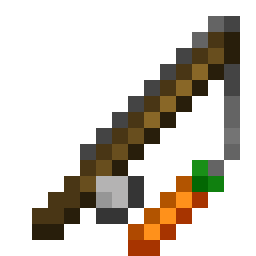
A Brush is the archaeology tool: hold use on a suspicious sand or suspicious gravel block and, after a couple of seconds of brushing, it gives up a single buried item and turns into ordinary sand or gravel. Breaking those blocks with a pickaxe destroys the loot, so the brush is the only way to get at it. What is buried is worth the trouble — pottery sherds that decorate a decorated pot, the Sniffer egg that hatches the game's only extinct mob, and armour trim templates including the ones that appear nowhere else. Four sites generate suspicious blocks: trail ruins hold the sherd and template variety, desert temples hide a single suspicious sand under the floor, desert wells have a few around the base, and warm ocean ruins scatter them among the stones. Trail ruins are by far the richest and are worth a dedicated trip. Durability is 64 uses, and it is crafted from a feather, a copper ingot and a stick, so carrying two on an archaeology trip costs almost nothing. Brushing while riding is not possible, and the block resets if you stop early, so stand still and finish the stroke.
Extracting pottery sherds, armour trim templates and sniffer eggs from suspicious sand and gravel — loot that is destroyed outright if you mine the block instead.
Brush is one of the tools a player relies on, and like all tools it has a finite number of uses. It has 64 points of durability. It accepts enchantments at an enchanting table or anvil.
Every copy occupies a full inventory slot. It is crafted from Feather, Copper Ingot, and Stick. Nothing on the crafting grid is made from it.
How to get it
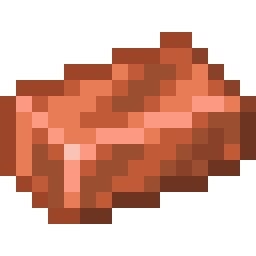
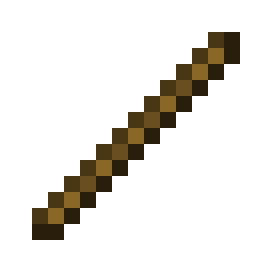
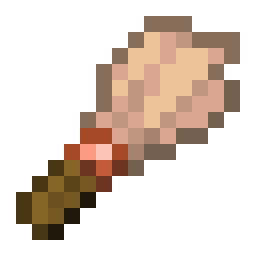
Craft 1 from 1 Feather, 1 Copper Ingot and 1 Stick. Each brush lasts 64 uses, which covers a whole trail ruins site with room to spare.
Tips
- Never break a suspicious block with a tool; the item inside is lost and the block cannot be replaced by hand.
- Brush from a crouch on the edge of a ruin so a stray mob does not interrupt the stroke and reset progress.
- Trail ruins are the only place the Wayfinder, Raiser, Shaper and Host trim templates generate, so bring spare brushes.
- Suspicious gravel underwater works the same way, but bring a Water Breathing potion for ocean ruins.
Version notes
Added in 1.20 with archaeology, trail ruins and the sherd set. 1.21 added no new suspicious-block sites, so trail ruins remain the richest source.
Properties
Brush lasts 64 uses before it breaks. Two worn copies can also be merged, on an anvil or a grindstone. Unbreaking III roughly quadruples the lifespan, and Mending replaces the repair cost with experience. Its enchantability of 1 decides how good the enchanting table's offers are: the higher the number, the more often a level-30 table offers the top-tier enchantment rather than a weak one. Brush does not stack — each one occupies an inventory slot of its own.
- Stack size
- 1
- Durability
- 64
- Enchantability
- 1
- Category
- Tools
Crafting recipe
Crafting Table

Brush
Enchantments it can take
3 enchantments can be applied to Brush: Mending, Unbreaking, and Curse of Vanishing.
Mending and Curse of Vanishing are treasure enchantments and never appear at an enchanting table — they come from loot chests, fishing or villager trades only.


Guides and tools that cover this
Frequently asked questions
How do you make Brush in Minecraft?
Brush is crafted from Feather, Copper Ingot, and Stick.
What is the stack size of Brush?
Brush does not stack at all. Every one you carry takes an inventory slot of its own, which is the practical limit on how many you take on a trip.
How much durability does Brush have?
Brush has 64 durability.
Can Brush be enchanted?
Yes — 3 enchantments apply to it, at an enchanting table with fifteen bookshelves, or from an enchanted book on an anvil. Mending is usually the one worth hunting for, because it removes the repair cost entirely.